
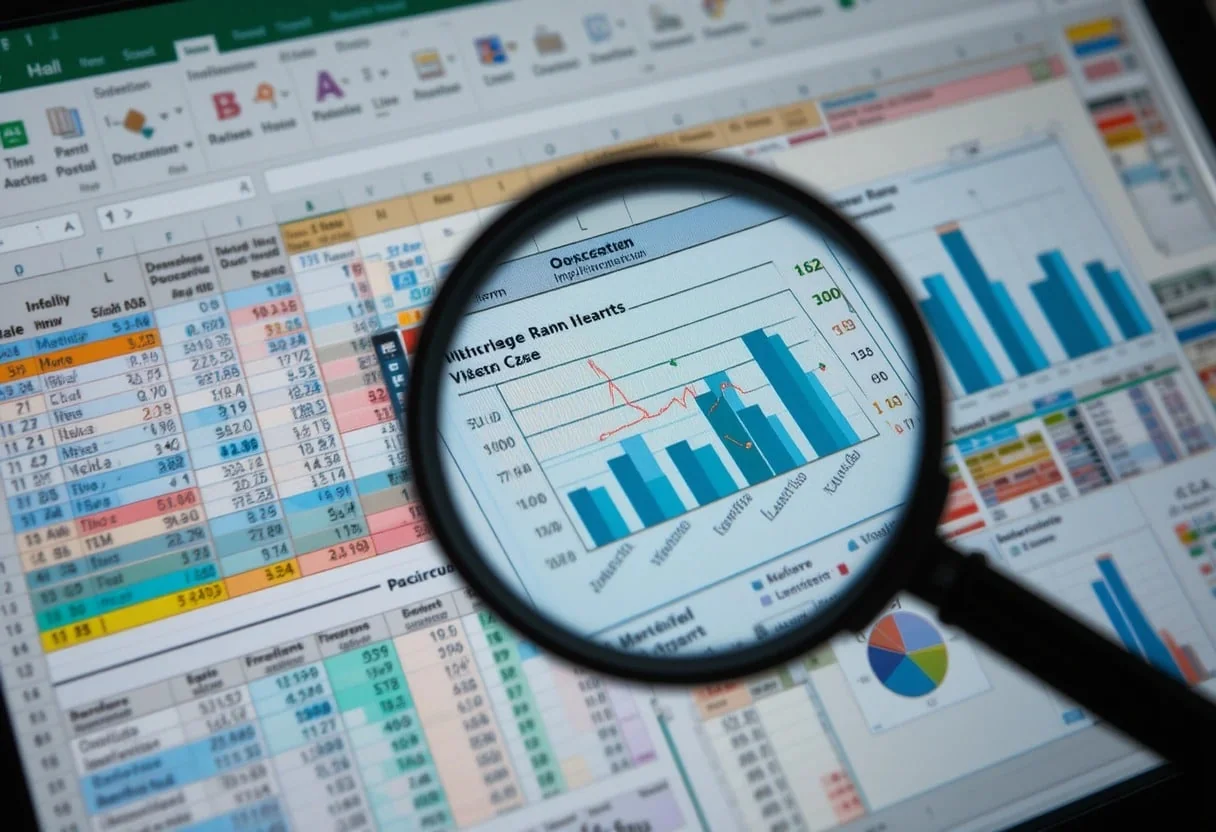
When analyzing data, sometimes the finer details get lost in a full-scale view. That’s why knowing how to Excel zoom in on graph visuals is essential for spotting trends and making precise decisions. Whether you’re adjusting axis bounds, using the zoom slider, or filtering specific data points, Excel provides multiple ways to focus on critical insights without losing the bigger picture.
I often use these techniques when analyzing financial data or presenting to stakeholders. For example, when examining quarterly revenue trends, zooming in can reveal subtle patterns that might be missed in a broader view. This level of detail can be the difference between identifying a potential issue early or missing it entirely.
By mastering Excel’s zoom features, you’ll be able to extract more value from your data visualizations. Whether you’re a financial analyst or a business leader, these skills will enhance your ability to interpret and communicate complex information effectively.
Key Takeaways
- Adjusting axis bounds or using zoom tools can reveal hidden data insights
- Keyboard shortcuts like SHIFT++ offer quick ways to zoom in on Excel graphs
- Zooming techniques improve data analysis and presentation clarity
Understanding the Zoom Plot in Excel
I find that mastering Excel’s interface is crucial for efficient graph manipulation. The View tab and Graph toolbar are key areas to focus on when zooming in on Excel graphs.
Navigating the View Tab
In my experience the View tab is essential for controlling graph visibility. I always start here when I need to zoom in on a graph. The Zoom tool is typically located in this tab. I click on it to activate the zooming function.
I also pay attention to the Gridlines option in the View tab. These fine lines help me see data points more clearly when I’m zooming in. I often toggle them on for detailed analysis.
Another feature I frequently use is the Zoom to Selection tool. It allows me to focus on specific areas of my graph quickly.
Identifying the Graph Toolbar
The Graph toolbar is my go-to for fine-tuning graph visuals. I locate it by clicking on the graph to select it. This action reveals a set of specialized tools.
In the toolbar, I look for the Format tab. It contains options for adjusting the graph’s appearance. I use the Size group to manually adjust the graph’s dimensions, effectively zooming in.
I also utilize the Axis Options in this toolbar. By adjusting the Minimum and Maximum values, I can zoom in on specific data ranges. This is particularly useful when I’m analyzing trends in financial data.
Lastly, I often use the Chart Elements button to add or remove components. This helps me focus on the most relevant parts of my graph during analysis.
Fundamentals of Excel Charting
Excel offers various chart types to suit different data visualization needs. I’ll cover the main types of charts and how to format data effectively for graphing.
Types of Excel Charts
Excel provides a wide range of chart types to suit different data visualization needs. I often use column charts for comparing values across categories. Line charts are my go-to for showing trends over time. For part-to-whole relationships, I prefer pie charts or stacked bar charts.
Scatter plots help me visualize correlations between two variables. I use area charts to highlight the magnitude of change over time. For financial data, I frequently employ candlestick charts to show stock price movements.
To create a chart, I select my data range and go to the Insert tab. There, I choose the most appropriate chart type for my analysis. Excel’s recommended charts feature can be helpful in selecting the right visualization.
Formatting Data for Graphs
Proper data formatting is crucial for accurate and meaningful charts. I always ensure my data is organized in a tabular format with clear headers. Each column represents a variable, and each row contains a data point.
For time series data, I put dates in the first column and corresponding values in adjacent columns. I use consistent date formats to avoid errors. When dealing with categorical data, I list categories in one column and their values in another.
I pay close attention to data labels, as they’re key for chart readability. I use the Format Axis option to adjust scale, intervals, and tick marks. This helps me zoom in on specific data ranges when needed.
To enhance data analysis, I often use named ranges for easy reference in formulas and charts. I also leverage Excel’s data validation features to maintain data integrity and consistency in my charts.
Zoom Features Within Excel
Excel provides several zoom options to tailor our graph view. I often use the Zoom to fit feature to quickly see the entire graph within a specific range. This is especially useful when I’m working with large datasets or complex visualizations.
Another handy option is the Zoom to Selection tool. I use this when I need to focus on a particular data point or trend within the graph. It allows me to isolate and examine specific areas without losing context.
For more granular control, I utilize the Axis Options. By adjusting the Minimum and Maximum values in the Bounds category, I can set custom zoom levels for individual axes. This is crucial when I’m analyzing data with widely varying scales or when I need to highlight specific data ranges.
Using the Zoom Slider and Zoom Percentage
The Zoom Slider and Zoom Percentage are my go-to tools for quick adjustments. Located in the bottom-right corner of the Excel window, these features offer intuitive control over the graph’s zoom level.
To use the Zoom Slider:
- I click and drag the slider left to zoom out or right to zoom in.
- For precise control, I click the + or – buttons at either end of the slider.
The Zoom Percentage display shows the current zoom level. I can click on this number to open a dialog box where I can enter a specific zoom percentage. This is particularly useful when I need to maintain consistent zoom levels across multiple graphs or worksheets for comparative analysis.
Zoom to Selection Technique
The Zoom to Selection technique is a powerful tool I use for detailed data exploration. Here’s how I apply it:
- I activate the zoom tool from the View tab.
- Next, I click on the graph within the worksheet.
- I then drag a box around the specific area I want to examine closely.
- Upon releasing the mouse button, Excel zooms in on the selected area.
This technique is invaluable when I’m conducting in-depth analysis of specific data points or trends. It allows me to quickly isolate and magnify areas of interest, making it easier to spot patterns, anomalies, or correlations that might not be apparent at a broader view.
For even more flexibility, I often combine this technique with the scroll wheel on my mouse. This allows for smooth, incremental zooming that I can fine-tune to my exact needs.
Optimizing Graph Visibility
I’ve found that optimizing graph visibility is crucial for effective data presentation. Clear, easy-to-read graphs can make or break important financial decisions. Let’s explore some key techniques I use to enhance graph clarity in Excel.
Improving Visibility with Zoom
When dealing with complex financial datasets, I often need to zoom in on specific areas of a graph to highlight critical data points. Excel offers several methods to achieve this. One technique I frequently use is adjusting the axis bounds.
To do this, I right-click on the axis and select “Format Axis” In the “Bounds” section, I manually set the minimum and maximum values. This allows me to focus on a particular range of data, which is especially useful for time series analysis or when examining specific financial periods.
Another trick I employ is using the Selection Pane. By hiding certain data series, I can zoom in on the most relevant information. This is particularly helpful when comparing multiple financial metrics on a single chart.
Adjusting Scale and Axis for Clarity
When I’m dealing with datasets that have a huge difference between values, adjusting the scale becomes essential. I often use a logarithmic scale for the y-axis to better visualize percentage changes or exponential growth in financial data.
To implement this, I right-click on the y-axis and choose “Format Axis” Under “Axis Options” I select “Logarithmic scale” This transformation can reveal patterns in stock prices or compound interest calculations that might be hidden in a linear scale.
For time-based financial data, I frequently adjust the x-axis to show specific intervals. By right-clicking on the axis and selecting “Format Axis” I can set custom unit labels and intervals. This allows me to highlight quarterly or annual trends more effectively.
Advanced Interactive Chart Techniques
Excel offers various tools for creating dynamic, interactive charts that enhance data analysis. I’ll explore two key techniques that can significantly improve how you interact with and present your financial data.
Leveraging Clicking and Dragging
I often use clicking and dragging to zoom in on specific areas of Excel graphs. This technique is invaluable for focusing on critical data points or time periods. To zoom, I simply click and drag to select the area of interest on the chart axes.
For financial time series data, I find this especially useful. I can quickly isolate quarterly performance or zoom in on a specific fiscal year. This level of interactivity allows me to spot trends and anomalies that might be missed in a full view.
Excel also allows me to set custom axis bounds. I go to the Axis Options menu and manually input minimum and maximum values. This gives me precise control over the displayed data range.
Incorporating Annotations and Labels
Adding annotations and labels to my charts significantly enhances their communicative power. I use these to highlight key data points, explain trends, or add context to financial metrics.
To add an annotation, I right-click on a data point and select “Add Data Label” I can then customize the label with relevant information like growth rates or market share percentages.
For more complex annotations, I use text boxes. I position these strategically to explain market events, policy changes, or other factors impacting the data.
I also leverage dynamic labels that update automatically with the data. This is crucial for creating interactive charts with dynamic elements. I use formulas in the label text to pull in current values or calculate metrics on the fly.
These techniques transform static charts into powerful, interactive tools for financial analysis and reporting.
Custom Scaling and Axis Management
Excel offers various tools for precise graph customization. I’ll explain how to use logarithmic scales and manual axis configuration to enhance data visualization and analysis.
Setting Logarithmic Scales
Logarithmic scales are crucial for visualizing data with large value ranges. I often use them to analyze exponential growth or compare values across different orders of magnitude.
To set a logarithmic scale:
- Click on the axis I want to modify
- Open the Format Axis menu
- Check the “Logarithmic scale” box
I can also set the log base, typically 10 for financial data. This transformation helps reveal patterns in percentage changes or ratios that might be hidden in a linear scale.
For time series data, log scales can show compound growth rates more clearly. I find this invaluable when analyzing long-term financial trends or comparing growth rates across different investments.
Manual Axis Range Configuration
Manual axis configuration gives me precise control over my graph’s focus and scale. This is essential for highlighting specific data ranges or ensuring consistent comparisons across multiple charts.
To manually set axis ranges:
- Select the axis
- Open Format Axis options
- Under “Bounds“, enter my desired minimum and maximum values
I use this technique to zoom in on key data points or to standardize axis ranges across multiple graphs for fair comparisons. It’s particularly useful when I’m presenting financial data to stakeholders and need to emphasize certain trends or thresholds.
By adjusting the axis cross point, I can also shift the focus of the chart. This is helpful when I want to highlight positive vs. Negative values or emphasize specific benchmarks in my financial analysis.
Strategic Analysis and Usage of Graph Zooming
Graph zooming is a powerful tool for extracting valuable insights from complex datasets. I’ve found it essential for pinpointing trends, anomalies, and key data points that drive informed decision-making in financial analysis.
Conducting Focused Data Analysis
When I zoom in on Excel graphs, I can uncover hidden patterns that might be missed at a broader view. I start by selecting the specific area of the graph I want to examine more closely. Then, I adjust the axis options to focus on a particular time period or data range.
For time series data, I often zoom in on volatility clusters or trend reversals. This allows me to identify potential leading indicators or market turning points. I use the FORECAST.ETS function to project future values based on these zoomed-in sections.
To enhance my analysis, I overlay technical indicators like moving averages or Bollinger Bands on the zoomed graph. This combination of focused view and additional metrics provides a more nuanced understanding of the data.
Maximizing Zoom for Financial Reporting
In financial reporting, zooming capabilities are crucial for presenting data effectively to stakeholders. I leverage Excel’s zoom tool to highlight specific sections of financial statements or KPI dashboards during presentations.
When creating quarterly reports, I zoom in on month-to-month changes to explain short-term fluctuations. This granular view helps me articulate the drivers behind performance variations to the board or investors.
I also use zooming to compare year-over-year data points more accurately. By aligning zoomed sections of different years, I can perform precise variance analysis and identify seasonal patterns or anomalies.
For complex multi-year projections, I create interactive dashboards where users can zoom into specific time periods. This allows for dynamic exploration of long-term forecasts while maintaining the ability to scrutinize near-term assumptions.
Frequently Asked Questions
Excel offers various ways to zoom in on graphs, adjust scales, and focus on specific data points. These techniques can greatly enhance data visualization and analysis in financial models and reports.
How can I adjust the zoom level on a specific area of a chart in Excel?
I often need to focus on particular data points in my financial models. To zoom in on a specific area, I select the chart and use the Zoom tool in the View tab. This lets me adjust the magnification precisely. For more granular control, I sometimes modify the axis scales directly in the chart options.
What is the method to increase the magnification of a particular section of a line graph in Excel?
When I’m analyzing trend lines in my financial forecasts, I frequently need to magnify certain sections. I do this by adjusting the axis bounds in the Format Axis pane. This allows me to zoom in on specific date ranges or value intervals, making it easier to spot subtle changes in the data.
Can the scale of an axis in an Excel chart be changed to focus on a dataset more precisely?
Absolutely. I often need to rescale axes to highlight key data points in my financial reports. To do this, I right-click on the axis, select “Format Axis” and adjust the minimum and maximum values. This technique is particularly useful when I’m presenting quarterly earnings data or comparing year-over-year performance metrics.
Is there a way to programmatically zoom into a graph using VBA in Excel?
Yes, I use VBA to automate zooming in my more complex financial models. I write macros that adjust the chart’s axis scales or zoom level based on specific triggers or user inputs. This is especially useful for creating interactive dashboards that allow users to drill down into different levels of financial data.
What steps are required to modify the axis scale to enhance the view of an Excel graph?
To modify the axis scale, I first select the chart and then the specific axis I want to adjust. I then access the Axis Options in the Format Axis pane. Here, I can set custom minimum and maximum values, adjust the major and minor units, and even logarithmically scale the axis if needed for certain financial analyses.
How do you effectively zoom out on an Excel graph to include a broader range of data?
When I need a broader view of my financial data, I zoom out by adjusting the axis bounds to encompass a wider range. I also sometimes use the Zoom Out button in the View tab. For a quick overview, I might temporarily switch to a scatter plot to see the full distribution of my data points before zooming back in on areas of interest.
